
Water polluted as a result of domestic, industrial, or agricultural activities is called wastewater, and the facilities established to clean the contaminated water from the pollutants and regain nature are called wastewater treatment facilities.
Wastewater is divided into two, domestic and industrial, according to its source. Both types of wastewater are discharged into the receiving environment by passing through treatment mechanisms designed according to the characteristics and limit values of the discharge point, or they are recycled for reuse. Receiving environment pollutant limit values and the pollution value of raw wastewater play a critical role in the treatment plant design. Besides, space requirements and cost are other important points to be considered.
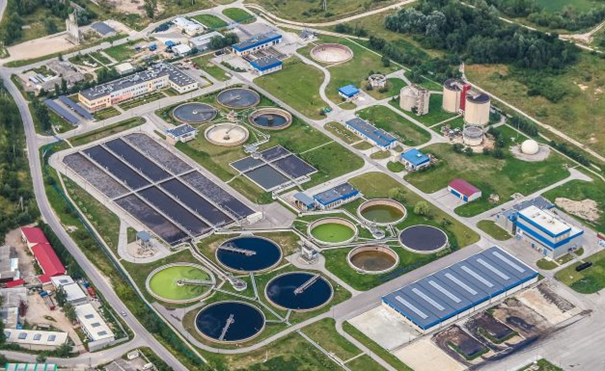
The main methods used for the treatment of waste water;
- Physical treatment
- Chemical treatment
- Biological treatment
- Advanced treatment
Physical Treatment
Physical treatment, also known as pre-treatment, is the process of separating the coarse solids (paper, plastic, etc.), sand, and oil from the wastewater by physical methods. Units such as coarse screens, fine screens, sand, and oil traps are used to separate these substances from wastewater.
Importance of physical treatment; If these substances are not removed at this stage, they may cause problems in treatment by damaging pumps, sludge removal equipment, valves, and pipes.
Chemical Treatment
The purpose of chemical treatment is to convert solid materials dissolved in water into low-soluble compounds by chemical reactions or to precipitate colloidal and suspended substances from wastewater by forming flocs. Chemical treatment processes, respectively; consist of coagulation, flocculation, and precipitation.
For the coagulation process, chemicals that we call coagulants in the wastewater and determined according to the characterization of the wastewater are dosed into the wastewater. During this process, acid / caustic is dosed to the water to adjust the appropriate pH value for the chemical reaction to occur. After the coagulation process, the wastewater is taken to the flocculation unit, in this unit, anionic polyelectrolyte is dosed to the wastewater to ensure that the flocs become coarse and easy to settle. The flocs formed and getting bigger are separated from the wastewater by settling in the settling basin.
Biological Treatment
Biological treatment is the removal of biodegradable substances found in wastewater in colloidal or dissolved form from wastewater by being used as a food and energy source by microorganisms. Food taken according to the life cycle of bacteria provides energy to them, and at the same time, the resulting by-products are released into the atmosphere as a gas.
According to the characterization of wastewater; Various biological treatment principles can be used, such as conventional extended aeration, sequential batch, MBBR, MBR.
Advance Treatment
It is the process of removing bacteria, viruses, or solid particles in the water before the treatment plant effluent is given to the receiving environment.