
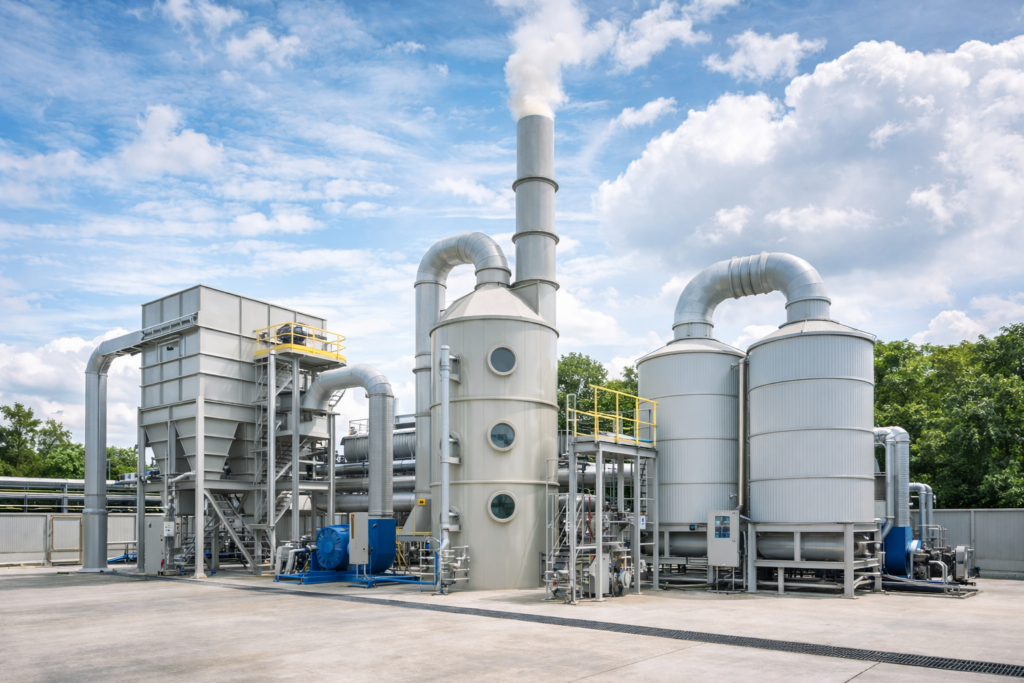
Air pollution is defined as the presence of gases, liquids, and particulate matter released into the atmosphere in quantities and durations that disrupt ecological balance. In addition, the emission of greenhouse gases contributes to global warming and climate change.
The main sources of air pollution include heating systems, motor vehicles, and industrial activities. Among industrial sources, the primary pollutants released into the atmosphere are waste gases, dust, and odors.
Regulatory Framework
In accordance with the “Regulation on the Control of Industrial Air Pollution” and the “Regulation on the Control of Odor-Causing Emissions,” emissions originating from factories, wastewater treatment plants, and similar facilities must be reduced below the legally defined limit values before being discharged into the atmosphere.
BAB Environmental Industries designs all air pollution control systems to be fully compliant with regulations, measurable, and sustainable.
Emission Treatment Systems
Emission control technologies are generally classified into physical, chemical, and biological processes. The selection of the appropriate system is based on pollutant type, concentration, flow rate, and operating conditions.
Through the application of these systems:
- Waste gas treatment (TOC / VOC removal),
- Odor control,
- Dust filtration
are achieved, ensuring emissions are discharged below regulatory limits.
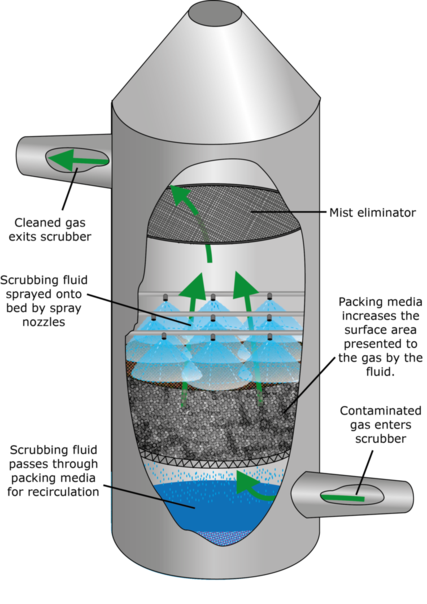
Scrubber / Chemical Gas Washing Systems
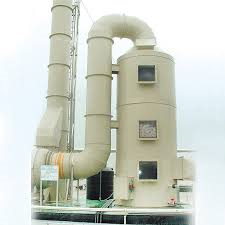
Scrubber systems are among the most widely used technologies for air pollution control. Depending on the characteristics of the raw exhaust gas, various design configurations are available.
These systems provide high-efficiency and easy-to-operate solutions for:
- Waste gas treatment,
- Odor removal
across a wide range of industrial applications.
Adsorption / Mineral (Activated Carbon, Zeolite, etc.) Filter
Adsorption systems remove pollutants such as TOC and VOC compounds by physically capturing them within a filter bed. Filter media selection depends on pollutant concentration, gas flow rate, and chemical composition.
The most commonly used adsorption media include:
- Activated Carbon
- Zeolite
UV/Ozone
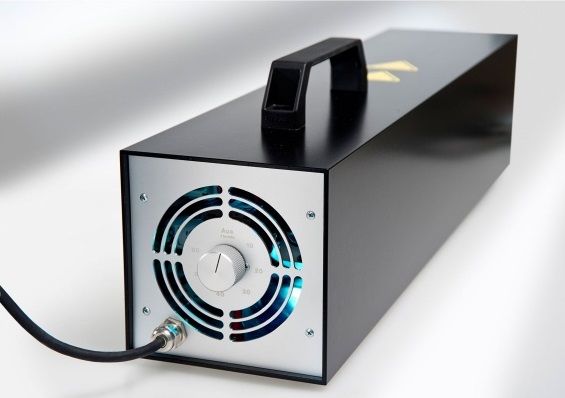
In UV/Ozone systems, oxygen in the air is converted into ozone using specialized UV lamps. The polluted gas stream is then treated within this ozone-rich environment.
This technology offers:
- Low operating costs,
- High treatment efficiency,
- Effective odor control and TOC/VOC removal
making it a widely preferred solution.
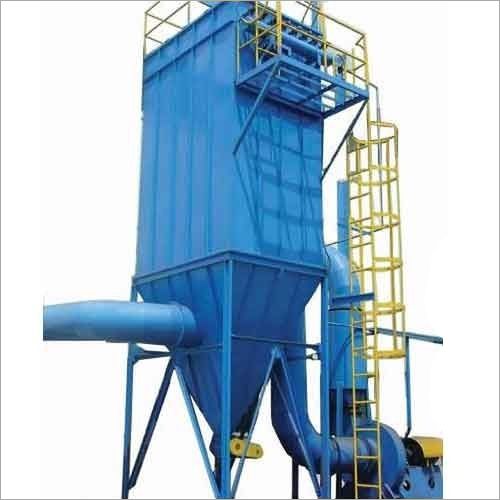
Jet Pulse Filter
Jet pulse filtration systems are designed to capture dust, fumes, and odor-laden air generated during industrial processes. The contaminated air is extracted at the source using fan systems, filtered, and then safely discharged into the atmosphere.
Different filter bag types are selected based on pollutant characteristics, air flow rates, and site conditions to achieve high dust collection efficiency.
BAB Environmental Industries Approach
BAB Environmental Industries addresses air pollution and emission control not merely as a treatment process, but as a comprehensive engineering discipline encompassing environmental responsibility, regulatory compliance, and operational sustainability. This approach ensures the implementation of reliable, measurable, and long-lasting emission control systems.