
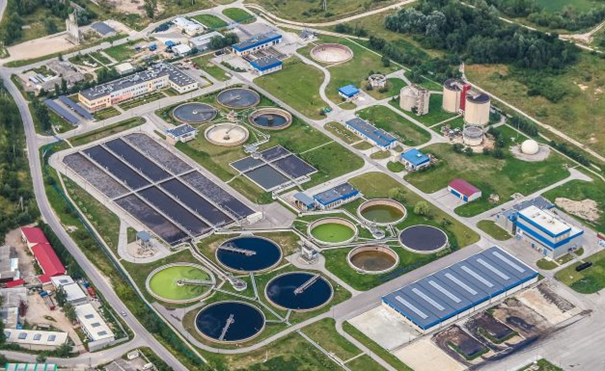
Water polluted as a result of domestic, industrial, or agricultural activities is defined as wastewater. Facilities established to remove pollutants from wastewater in order to return it safely to the environment or recover it for reuse are referred to as wastewater treatment plants.
Wastewater is mainly classified into two categories based on its source: domestic and industrial wastewater. Both types are treated through processes designed according to the characteristics of the receiving environment and legal discharge limits.
Under the BAB Environmental Industries approach, the following parameters are evaluated together to develop optimal and sustainable treatment solutions:
Pollution load of raw wastewater
Receiving body discharge standards
Available area requirements
Investment and operational costs
_______________________________________________________________________________
Main Wastewater Treatment Methods
Physical Treatment
Chemical Treatment
Biological Treatment
Advanced Treatment
Physical Treatment (Pre-Treatment)
Physical treatment involves the removal of coarse solids (paper, plastics, etc.), grit, and oil & grease from wastewater using physical separation methods. At this stage, the following units are commonly applied:
Coarse and fine screens
Grit chambers
Oil and grease traps
At BAB Environmental Industries, physical treatment is considered a critical step for reliable plant operation. If these materials are not removed at the pre-treatment stage, they may cause damage to pumps, valves, pipelines, and sludge handling equipment, leading to serious operational problems.
Chemical Treatment
The purpose of chemical treatment is to remove dissolved or suspended substances from wastewater by converting them into low-solubility compounds or by forming flocs through chemical reactions.
Chemical treatment generally consists of the following stages:
Coagulation
Flocculation
Sedimentation
During coagulation, coagulant chemicals selected based on wastewater characterization are dosed into the water. Required pH adjustments are carried out using acid or caustic dosing to ensure effective reactions. In the flocculation stage, anionic polyelectrolytes are added to promote floc growth, and the formed flocs are separated from wastewater in sedimentation tanks.
Biological Treatment
Biological treatment is based on the removal of biodegradable organic matter by microorganisms that use these substances as a source of energy and nutrients. During this process, organic pollutants are broken down, and by-products are released into the atmosphere in gaseous form.
Depending on wastewater characteristics, BAB Environmental Industries designs and applies various biological treatment processes, including:
Conventional extended aeration systems
Sequencing Batch Reactor (SBR)
Moving Bed Biofilm Reactor (MBBR)
Membrane Bioreactor (MBR)
Advanced Treatment
Advanced treatment is applied prior to discharge to the receiving environment or reuse, aiming to remove bacteria, viruses, dissolved substances, and fine particles remaining in treated effluent.
Within this scope, BAB Environmental Industries utilizes:
Filtration systems
Membrane technologies
Advanced oxidation and disinfection methods when required
to achieve regulatory compliance and high-quality reclaimed water suitable for reuse.
_______________________________________________________________________________
BAB Environmental Industries Approach
Client-specific process design
Engineering-driven and regulation-compliant solutions
Environmentally friendly and sustainable systems 💡 Energy-efficient designs with optimized operating costs